
Ryde joins the Shared Micromobility Alliance
17 August 2026
by Jonathan Andrews
Micromobility operator Ryde Technology has joined the Shared Micromobility Alliance (SMA) to help operators and cities work towards common micromobility standards rather than developing separate solutions to the same regulatory and operational challenges in each market.
Ryde operates across the Nordics and is expanding into Germany.
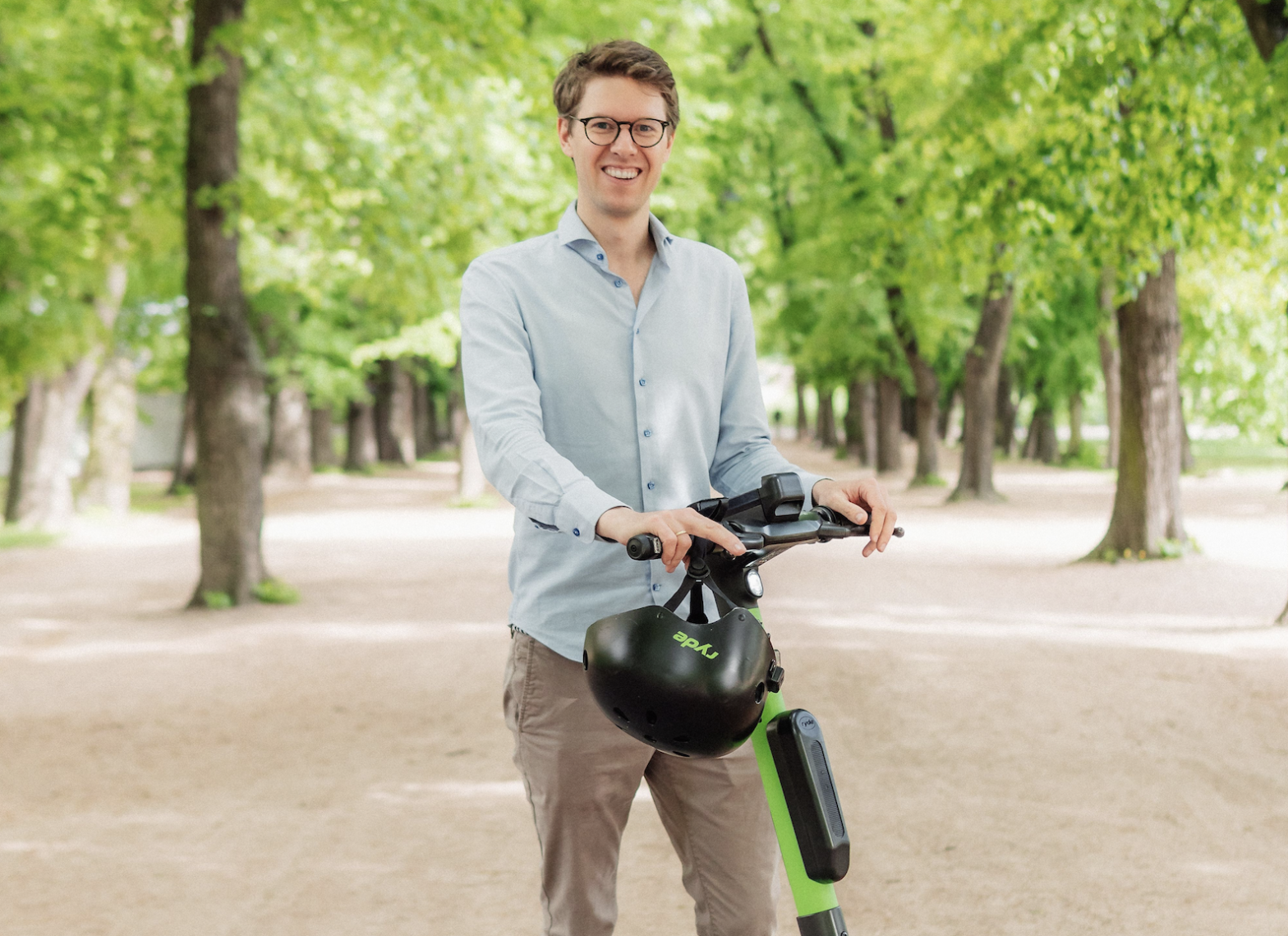
“We believe the industry needs a shared, credible platform where operators and cities can exchange knowledge and work towards common standards, rather than each city and operator solving the same problems on its own,” Tobias Balchen (pictured), CEO of Ryde Technology, told Cities Today.
“The alliance’s focus on best practice, responsible regulation and closer collaboration between industry and municipalities matches how we already try to operate in the Nordics,” he added. “For Ryde, membership gives us access to a wider network of cities and peers to learn from, and a channel to bring our own experience from markets like Oslo into a broader European conversation.”
Oslo illustrates the level of demand that shared micromobility can generate. Around 20 million trips were recorded in the city during 2025, a total equivalent to roughly one-third of the volume carried by its public tram network.
Balchen said Oslo stands out because of its exceptionally high underlying demand. Its compact and hilly geography is particularly well suited to micromobility, while Norwegians are quick to adopt new technology. The city has also taken a proactive and collaborative approach to regulation.
“I expect strong growth to continue across the Nordics and Europe, with more and more people adopting shared micromobility as part of their everyday travel. Shared e-bikes are likely to take a growing share of that mix, and we will keep seeing consolidation among operators as the market matures,” he said.
Targeted regulation
Regulatory developments are among Ryde’s main practical concerns, from the general direction of city policies to the process of securing and retaining access to individual markets.
“The relationship works best where regulation is targeted at the actual problem rather than applied as a blanket rule. Cities that start by asking what specific issue they are trying to solve, whether that is a particular street, a particular type of parking violation or a particular time of day, and then regulate that precisely, get far better outcomes than those that impose broad restrictions across an entire fleet or city,” Balchen said.
Moving from short-term crisis management to longer-term partnerships will require changes from both sides.
“Cities need to be willing to base rules on data and dialogue rather than headlines, and operators need to be transparent enough, with data and with performance, to earn that more targeted, trust based approach,” he said.
This preference for targeted regulation also informs Ryde’s view of how the sector should develop over the next five years. The company opposes broad restrictions on fleet numbers or operating areas when rules could instead be directed at a specific concern.
Direct control of operations
Ryde runs an entirely in-house operating model, giving it direct control over training, maintenance and street-level services.
He regards this approach as a competitive advantage because Ryde can control the quality of its operations for both riders and cities. However, it makes expansion more demanding, as every new market requires the company to recruit and train a substantial local team rather than sign an agreement with a third party.
The model also shapes how Ryde responds to concerns about parking, safety and anti-social riding.
“The starting point is our in-house model. Because we run operations ourselves rather than through subcontractors, we can respond quickly when something changes on the ground, whether that is parking behaviour or how people ride,” he said.
“On parking, we act directly on every report of a badly parked vehicle. On safety, we advocate for slow zones, for example as part of our push in the German market. We back that up with our own IoT: onboard geofencing that detects, in real time, when a vehicle enters a slow zone or a no-go zone, the same technology behind that German rollout.”
The combination of local teams and onboard technology allows Ryde to respond at street level while adapting the operation of its services to designated areas.
Everyday commuting
He expects shared scooters and bikes to represent a significantly greater share of everyday transport in Nordic cities within five years, continuing their development from a leisure service into a regular commuting option.
Whether that happens will depend heavily on the policy choices cities make now.
“Targeted regulation that addresses specific problems, rather than blanket restrictions on numbers or operating areas, will determine whether shared micromobility matures into a trusted part of the transport system or gets constrained before it reaches its potential,” he said.
Balchen sees membership of the SMA as an opportunity to contribute to that development by sharing its experiences openly and building longer-term relationships between the industry and municipalities.
“If I should leave people with one thought, it is this: shared micromobility has stopped being a novelty and is becoming part of how Nordic cities actually get around,” he said.
“For us, joining the SMA is about helping the industry grow up together, sharing what works, being upfront about what does not, and treating cities as long-term partners rather than only showing up when there is a problem to manage. We are genuinely optimistic about where this is heading, and glad to be part of that conversation through the alliance.”
Image: Ryde Technology