How lighting makes the stadium experience begin outside
19 April 2026
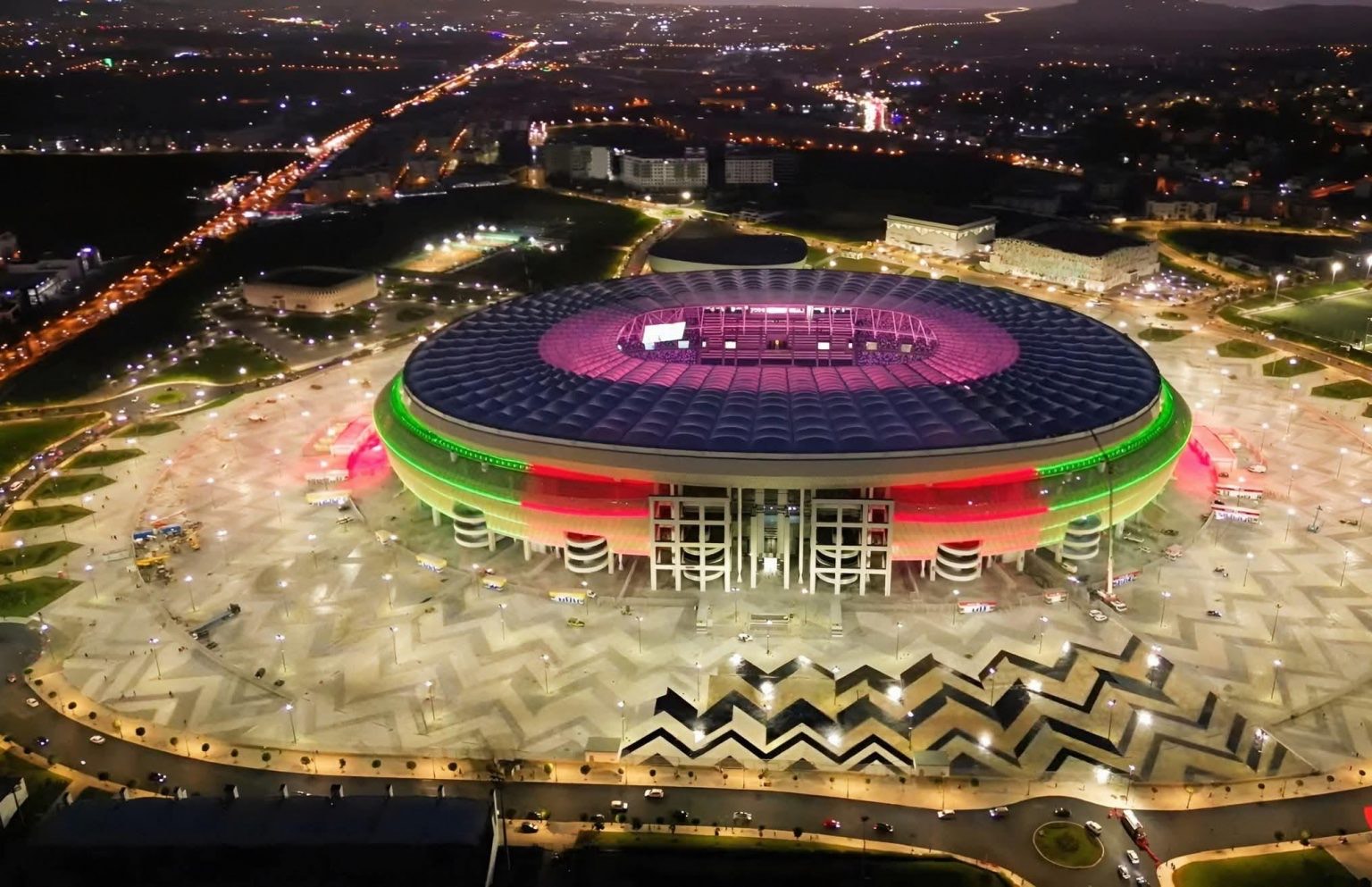
In Tangier, the Grand Stadium on Morocco’s northern coast is being positioned for a global stage. Following the Africa Cup of Nations 2025 and with the 2030 FIFA World Cup ahead, the venue’s transformation reflects a broader ambition–to deliver infrastructure that performs under pressure while shaping how the city is experienced.
That ambition extends beyond the stadium into the surrounding environment, where the success of major events depends on how effectively people can arrive, move and leave at scale.
For Lamalif Group, responsible for the stadium’s wider lighting environment, the brief focused on creating an exterior setting that could handle peak demand while reinforcing a strong sense of place. The aim was to ensure that surrounding spaces operate reliably during high-pressure periods while contributing to a clear identity for the venue within the city.
“We approached the project as a flagship infrastructure, combining high-performance lighting with a strong architectural and urban identity,” says a Lamalif Group spokesperson.
Designing for movement and clarity
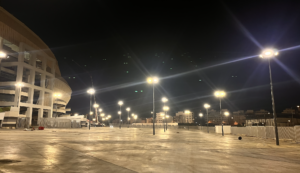
Large-scale events compress movement into short timeframes, placing pressure on access routes, parking areas and circulation zones. Lighting plays a central role in structuring these spaces, helping people navigate safely and efficiently.
“Lighting enhances the fan journey by ensuring clear wayfinding, safety, and comfort through well-lit access routes, parking areas, and circulation zones,” says the spokesperson.
At Tangier, the focus was on consistency rather than intensity. Lighting defines routes and transitions between zones, reducing uncertainty for visitors moving through unfamiliar surroundings. This creates a more legible environment, particularly during peak periods when crowd movement is highest.
“It also creates a strong emotional impact, with dynamic façade and exterior lighting transforming the Grand Stadium into a landmark experience from arrival to departure,” explains the spokesperson.
Key facts
Location: Tanger, Morocco
Stadium capacity: 75,500 people
Main IoT applications: Smart Lighting
Number of lights: 1,160 LED luminaires controlled by 580 smart lighting nodes
Project completion: 2025
Building a system that adapts
To deliver this, the exterior lighting was designed as a connected system rather than a fixed installation. Working alongside Lamalif Group, Paradox Engineering/MinebeaMitsumi Group implemented a network of 580 smart lighting nodes controlling approximately 1,160 LED luminaires, all linked to a central management system.
Carlo Bernocco, Head of Business and Customer Success, Paradox Engineering, says the project’s scope extended beyond a standard lighting upgrade.

“When our partner Lamalif Group approached us about the Tangier Grand Stadium, it was immediately clear that this was more than a conventional lighting project. It represented an opportunity to demonstrate how lighting can make a city thrive,” he says.
“From the outset, the brief went beyond simply illuminating the areas surrounding the venue. We were asked to help design and deliver a distinctive stadium experience through light, enhance the visitor journey, and support the city’s broader modernisation ambitions. That combination of technical challenge and urban impact made the project particularly compelling.”
The system allows operators to adjust lighting depending on how the site is used, shifting from routine schedules during quieter periods to more responsive configurations during events.
“The central management system allows operators to define and automate different lighting scenarios depending on the context,” he adds. “On non-event days, lighting can follow natural cycles, thus adjusting to sunrise and sunset to ensure efficiency. On match days or during large events, tailored lighting schemes can be activated to support crowd management, enhance safety, and create a vibrant atmosphere around the venue.”
Supporting operations at scale
During peak flows, when large numbers of people are entering or leaving at once, lighting becomes part of how the space is managed. Operators can prioritise specific areas and adjust illumination levels to reflect changing conditions across the site.
Because each light point can be controlled individually or grouped, the system enables targeted adjustments rather than uniform changes. This ensures that lighting reflects actual usage, supporting movement without over-lighting quieter areas.
Managing the network in real time
The central platform provides continuous visibility of the lighting network, allowing operators to track performance and respond quickly when issues arise.
“The system provides centralised control and real-time monitoring, enabling operators to manage all lighting zones efficiently and detect faults proactively. It also reduces operational costs through energy optimisation, automated scheduling, and simplified maintenance, improving overall performance of the Grand Stadium,” says the Lamalif Group spokesperson.
Aligning performance with efficiency
Efficiency is delivered through responsiveness. By adjusting lighting levels and schedules automatically, the system ensures that energy is used only where required while maintaining operational standards.
“Smart lighting minimises waste by ensuring that lights are only used when and where they are needed, and at the appropriate intensity. This reduces overall energy consumption and leads directly to lower operating costs for stadium operators,” says Bernocco.
A foundation for future events
As Tangier prepares for future international tournaments, the infrastructure around the stadium will play a critical role in how the venue performs under pressure. The exterior lighting system supports this by improving movement, strengthening oversight and adapting to different scenarios.
The project also reflects a broader shift in how cities approach infrastructure linked to major events.
“Cities and operators increasingly recognise the risks of vendor lock-in and are therefore prioritising standards-based technologies and open data models,” says Bernocco. “This approach ensures long-term flexibility and allow systems to scale, integrate third-party solutions, and remain resilient to technological change.”
In Tangier, that approach is visible in a system designed for long-term use. On the ground, its impact is seen in how the space functions–guiding movement, supporting operations and adapting as demand changes.
At the stadium, the experience does not begin at the entrance. It starts outside, shaped by the infrastructure that manages the flow of people and sets the tone for what follows.
Brought to you in partnership with: