

How cities can turn mobility innovation into lasting change
29 September 2026
CoMotion LA marks its tenth anniversary this year. Looking back over the past decade, which mobility developments have exceeded your expectations, and where has progress proved slower than anticipated?

The biggest surprise has been how quickly artificial intelligence has come off the screen and onto the street. Ten years ago, the first generation of autonomous vehicles was being tested in the Bay Area, usually with a safety driver behind the wheel and an engineer with a laptop in the passenger seat. I remember going on a couple of early Waymo test drives in 2018 or so–seems like the dark ages now. In many ways, AVs were the first real application of AI in the physical world. Today, ever-expanding fleets of robotaxis carry paying passengers in Los Angeles and a growing list of other cities. Delivery robots navigate sidewalks, and autonomous trucks are starting to be tested out on freight corridors. I’m convinced that autonomy in all its forms, for people, goods and logistics, will become ubiquitous in cities everywhere. That is no longer a question of if, only of when and how.
Where progress has been slower is on the governance side. City officials have learned an enormous amount over the past decade about working with innovative mobility companies. Los Angeles, for example, pioneered the Mobility Data Specification, which is now used by cities around the world to manage shared vehicles. But the gap between what technology makes possible and what residents actually experience in their daily commute is still too wide. Procurement cycles, permitting and inter-agency coordination still move at a pace set for a different era. Government remains slow, and closing that gap is the great unfinished business of the next ten years.
This year’s programme considers how major events can accelerate transport improvements. What could the 2028 Olympic and Paralympic Games deliver for Los Angeles that creates a lasting benefit for residents rather than a temporary event solution?
The Games will have an enormous, even historic, impact on Los Angeles! We shouldn’t forget that they arrive at a moment of massive innovation in mobility: autonomous vehicles, connected everything, and urban air mobility finally becoming real. At the same time, public transit is expanding at an absolutely unprecedented pace. I suspect future historians will speak of a “pre-Games” and a “post-Games” Los Angeles.
The test of success is simple: what is still running on the day after the closing ceremony? The lasting legacy shouldn’t be temporary shuttle fleets and closed lanes. It should be permanent infrastructure: dedicated bus lanes, first- and last-mile connections to transit stations, better curb management and integrated digital payment. It should also be something less visible but just as important: new habits. If millions of visitors and residents discover during the Games that they can get around Los Angeles without a private car, and if the city makes that experience permanent, then 2028 will have done for mobility what 1984 did for the city’s global image.
Autonomous vehicles have moved from demonstrations to commercial services in cities including Los Angeles. What questions should city leaders now be asking as they consider how AVs fit alongside public transport and other mobility options?
The key question is whether AVs will complement public transit or compete with it. Left to market forces alone, robotaxis could simply add more vehicles, and more empty miles, to already congested streets. Integrated intelligently, they could solve one of transit’s oldest problems: getting people the first and last mile to and from the station.
That’s why I believe experiments that seamlessly connect autonomous ride-hailing to public transit need to be introduced and then expanded across Los Angeles County, and I’m confident they will be. Going forward, those connections should probably be mandated as a condition of operating at scale. City leaders should also be asking about curb access and pricing, data sharing, service to lower-income and underserved neighbourhoods, accessibility for riders with disabilities, and the effect on the workforce. A robotaxi that feeds a metro station is a public asset. A robotaxi that circles the block waiting for a fare is not.
Artificial intelligence, electrification and new forms of mobility feature prominently in this year’s programme. Which emerging technologies are closest to delivering meaningful improvements for urban transport, and which remain overhyped?
Autonomous ride-hailing is clearly the technology closest to changing how people move through cities at scale. It will feature prominently at CoMotion this year, and we look forward to welcoming operators such as Waymo, Zoox and others. Less glamorous but just as important is AI behind the scenes: smarter traffic signals, predictive maintenance for transit fleets, and dynamic routing for buses and deliveries. These can deliver real gains without anyone having to buy a new vehicle.
I’m also very excited about transportation in the third dimension, meaning the air. Air taxis will make their public debut around the 2028 Games. But I think they will remain limited for some time to specific high-value routes, such as the San Fernando Valley to LAX, or downtown to the airport. The early vision of Advanced Air Mobility scaling so fast that it would significantly reduce ground traffic was clearly overhyped. That may have to wait another generation, until autonomous eVTOLs are certified and widely accepted by the public. Ten years from now, I expect air mobility to be a valuable premium option, probably not a mass-transit solution. But a Jetsons’ world is coming…
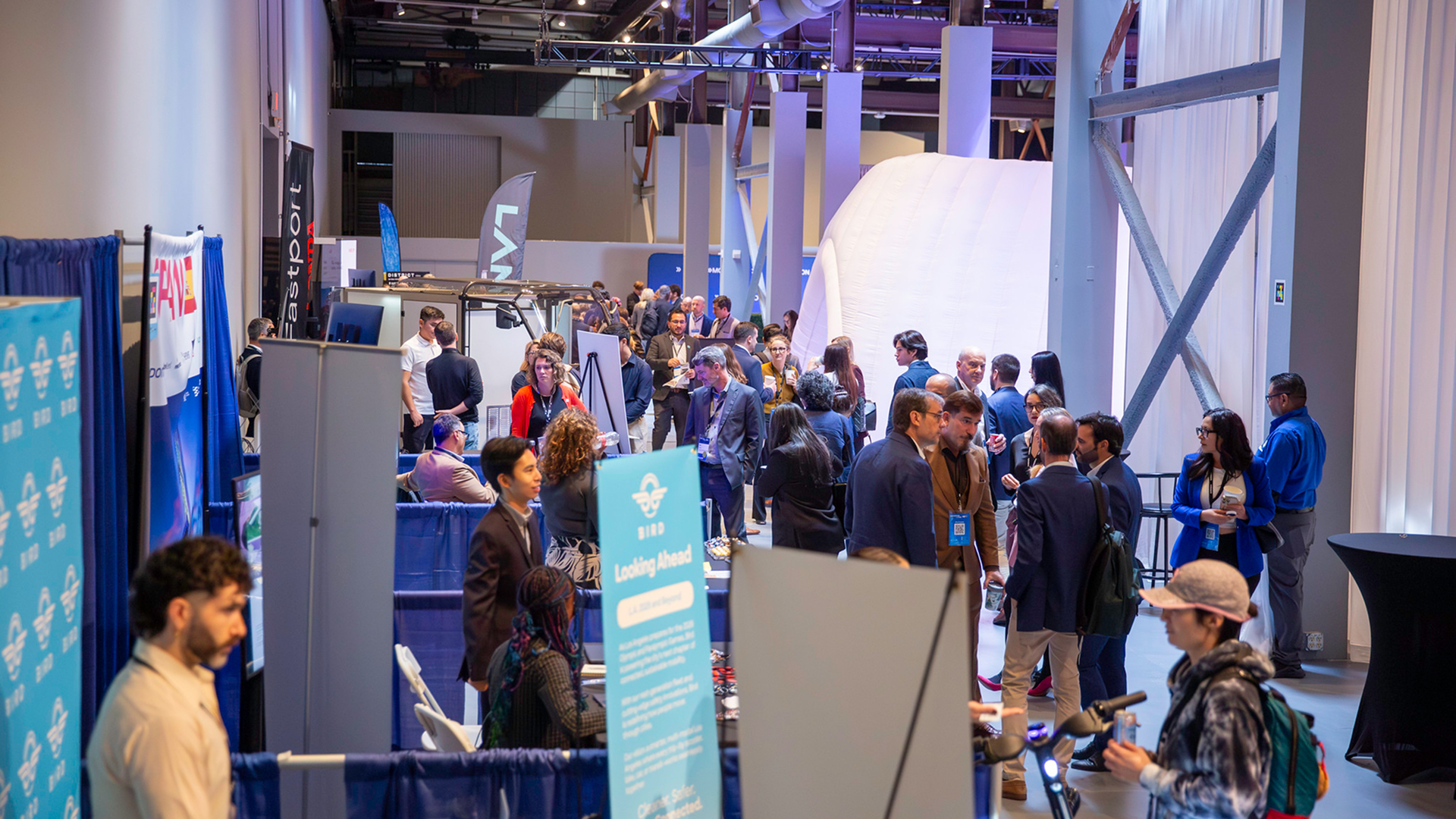
Bringing city leaders, operators, technology companies and investors together is central to CoMotion. What needs to change over the next decade to help promising mobility pilots progress into services that cities can deploy affordably and at scale?
We’ve become very good at pilots and not nearly good enough at what comes after them. Cities everywhere suffer from “pilot purgatory.” A promising project runs for six or 12 months, generates a press release and a report, and then quietly disappears because nobody planned for a budget line, a procurement pathway or an operating model beyond the trial. I think four things need to change.
First, pilots should be designed to scale from the first day. That means agreeing up front on clear success metrics and on what happens if those metrics are met: a pre-negotiated path to a longer-term contract, rather than starting from scratch with a new tender.
Second, cities need to buy together! A single mid-sized city is a small customer, and every company that has to adapt its product to a different set of local rules loses money doing so. Regional and even national purchasing consortia, shared data standards and common permitting frameworks would make the market far more attractive. Los Angeles showed what’s possible with the Mobility Data Specification, which cities around the world now use.
Third, public agencies should buy outcomes rather than hardware: pay for trips delivered, emissions reduced, or residents connected to jobs, and let operators compete on how to achieve them. This shifts technology risk to the private sector, which is better placed to carry it, while cities keep control over public goals.
Finally, we need more patient capital. Mobility is infrastructure, and infrastructure doesn’t follow the three-to-five-year horizon of a typical venture fund. Blended finance, bringing together public money, infrastructure investors and philanthropy, will be essential to carry good ideas across the valley between pilot and scale.
None of this happens unless the public and private sectors actually understand each other: their constraints, timelines and incentives. That’s why a gathering like CoMotion exists.

Powered by: