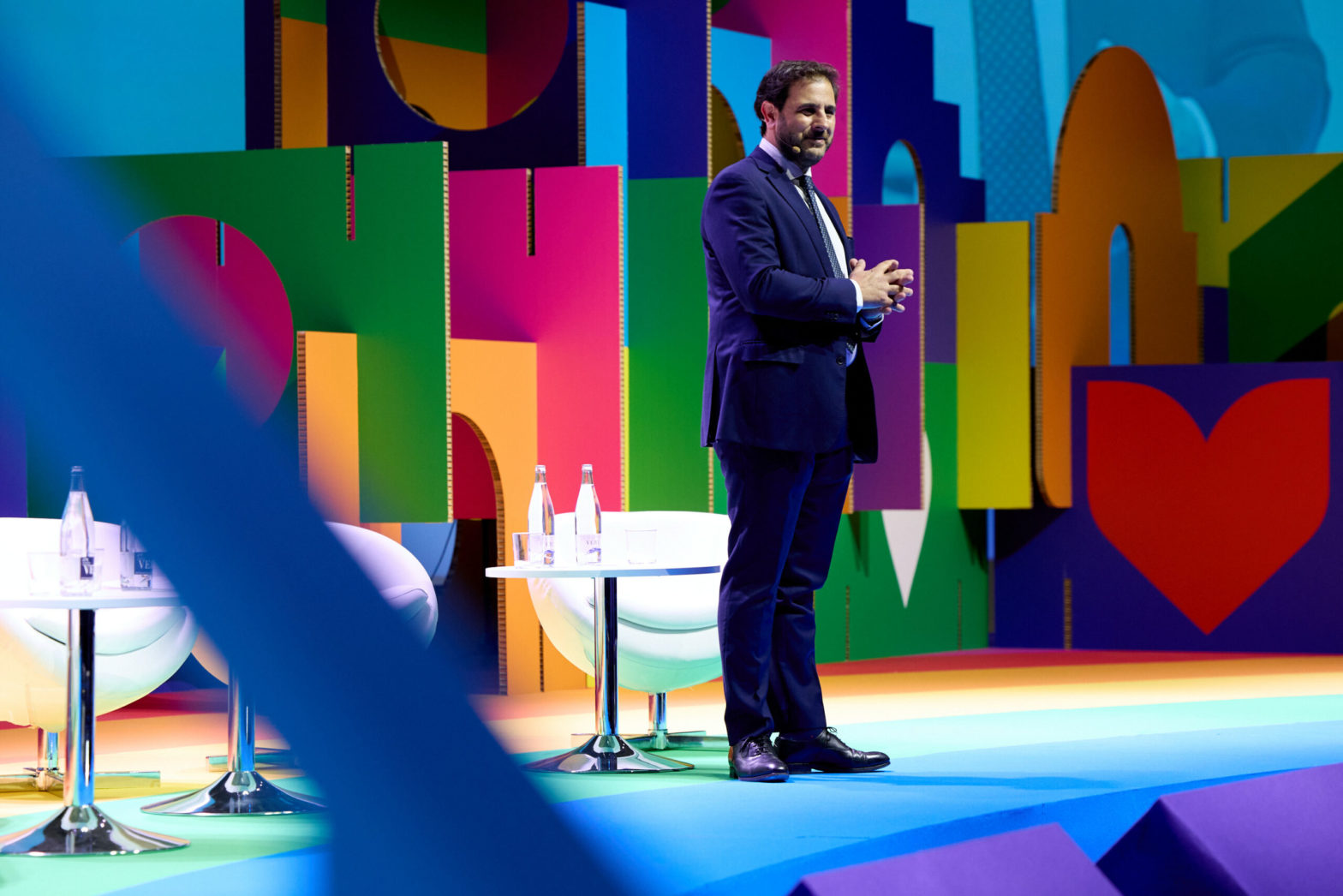
Photo: Smart City Expo
Urban solutions, real impact
15 July 2026
by Ugo Valenti, Director of Smart City Expo World Congress
For years, the masterplan for better and more liveable cities was driven by the sheer ambition of a better and more sustainable future for all, by the promise of smarter infrastructure, cleaner energy, and seamlessly connected urban systems. We drafted the chapters of an urban future, rendered it in digital twins, and watched them being tested in screens that recreated fully-sensorised metropolises. The smart city was, for a long time, more vision than reality–a compelling story in search of its first chapter. That chapter is here.
Today, cities are not just writing the future of urban living–they are building it. Decades of bold policies and strategic investment have started to reshape them: using cycling infrastructure and district heating to turn entire capitals into living chapters of carbon neutrality; integrated networks of sensors and predictive systems to create command centers capable of managing traffic, water, and energy with a precision that was unthinkable a generation ago; and deploying new and old solutions such as cable cars and urban escalators to connect isolated hillside communities to the economic heart of their cities, rewriting geography as opportunity.
The smart city has come of age. The ideas that once were mere drafts on the drawing table–artificial intelligence, real-time data, digital infrastructure–are now the tools that are transforming the very essence of metropolises and writing a new future for them.
And with this new chapter comes a plot twist–one that addresses perhaps the most fundamental challenge ahead: housing. For millions of people, the most pressing question about their city is not about connectivity or sustainability. It is far more immediate: Will I be able to keep calling the city that raised me home? Families priced out of the neighbourhoods, increasingly growing urban populations, young professionals commuting hours to get to their jobs, and elderly residents displaced by the very regeneration meant to improve their city.
That is why, at Smart City Expo World Congress 2026, housing takes centre stage–not as a new topic that complements innovation, but as one of the most complex and consequential chapters where technology, design, governance, and community must converge. Because a city that cannot house its people is not a smart city.
Held in Barcelona from November 3rd to 5th alongside Tomorrow.Mobility World Congress, Tomorrow.BlueEconomy, and a new housing summit, the 2026 edition will bring together the cities, companies, and institutions turning bold ideas into lasting change.
Because real impact is not measured in pilots or prototypes. It is measured in lives improved, in communities strengthened, in urban systems that work–not just efficiently, but equitably.
The future of cities is not a technological question. It is a human one. And the measure of a smart city is not how it looks on the drafting table, how it looks on testing screens–but how it impacts on every street, on every service and every person that calls it home.

Powered by: