
UK pilot shows training boosts disabled access to shared micromobility
04 February 2026
by William Thorpe
A pilot project in Salford, UK, has shown that targeted training and engagement can significantly increase the use of shared e-bikes and e-scooters among disabled people, challenging city strategies that rely primarily on infrastructure delivery.
Led by Collaborative Mobility UK (CoMoUK) and delivered by Cycling UK, the trial worked with 41 disabled participants through a series of in-person training sessions designed to build confidence, practical skills and familiarity with shared micromobility services. More than half of participants went on to ride independently within a month of completing the programme.
The findings underline that while safe and accessible infrastructure remains essential, it is not sufficient on its own to unlock uptake. Instead, the pilot highlights the role of training, service design and communication in reducing barriers linked to confidence, safety and digital access.
Richard Dilks, Chief Executive of CoMoUK, told Cities Today that cities need to broaden how they think about inclusion in micromobility.
“Infrastructure continues to be vital for participation in micromobility, but so are the right services, in the right format, communicated effectively,” he said.
A key lesson from the project was the effectiveness of outreach through Disabled People’s Organisations (DPOs). Promotion via trusted disability networks proved more successful at encouraging people to attend training and try shared services than general marketing alone.
Dilks said scaling this approach would require greater coordination and sustained funding across the public sector, operators and representative groups.
“This is certainly something we and many other organisations would like to see,” he said. “There would need to be more time committed to this within relevant bodies such as public sector authorities, operators, and DPOs, which would of course require funding. On top of that, further research to build on the findings of this pilot project is needed, to keep exploring what works and how to apply it.”
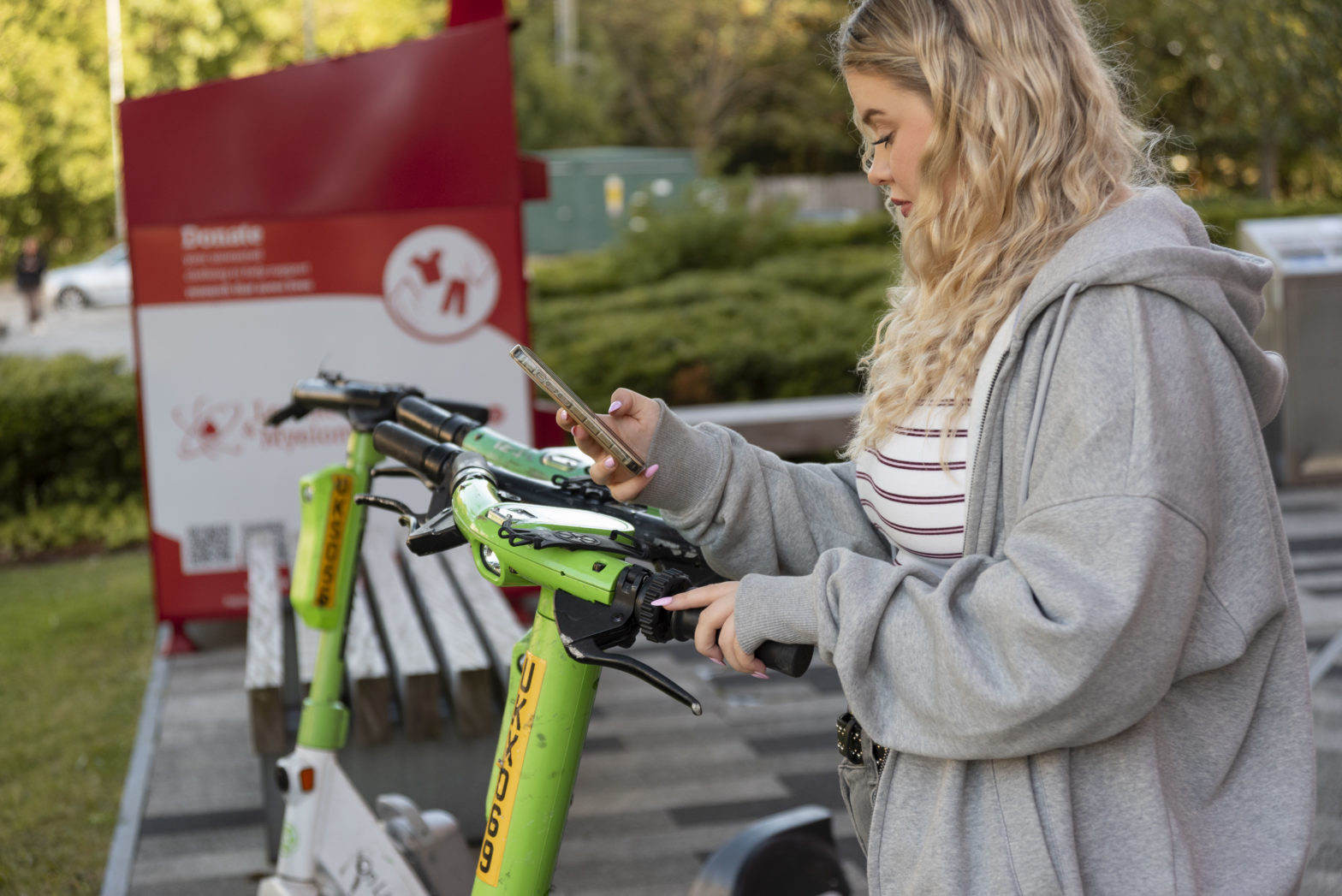
The training combined off-road practice, supported on-street riding and guidance on using scheme apps, directly addressing common concerns that had previously prevented participants from using shared micromobility.
However, the pilot also highlighted ongoing structural barriers, particularly the requirement for a driving licence to access shared e-scooter trials in the UK. While this is ultimately a matter for national legislation, Dilks said cities and operators can still act.
“This only affects shared e-scooter trials and is something that we hope will be removed as and when the UK Government legislates on e-scooters and other innovative transport options,” he said. “Before then, immediate actions could include better promotion of existing schemes, the organising of activities targeted at disabled people, and local authorities making their goals in this area clearer to operators.”
Beyond training, Dilks pointed to customer support and communication as areas where operators could deliver rapid accessibility gains.
“As well as training, operators can ensure they are providing good customer support from staff with the right training and communication skills, and that this is promoted effectively,” he said.
Key findings from the pilot
- 41 disabled participants took part in 15 in-person training sessions
- Over 50 percent rode independently within a month of completing training
- 71 percent said they were likely to use shared e-bikes independently
- 43 percent said the same for shared e-scooters
- Safety concerns and lack of confidence using apps were major pre-training barriers
- Outreach via Disabled People’s Organisations was the most effective recruitment route
- The driving licence requirement for shared e-scooters remains a significant barrier.