Study finds no parking surge from New York congestion pricing
18 July 2026
by William Thorpe
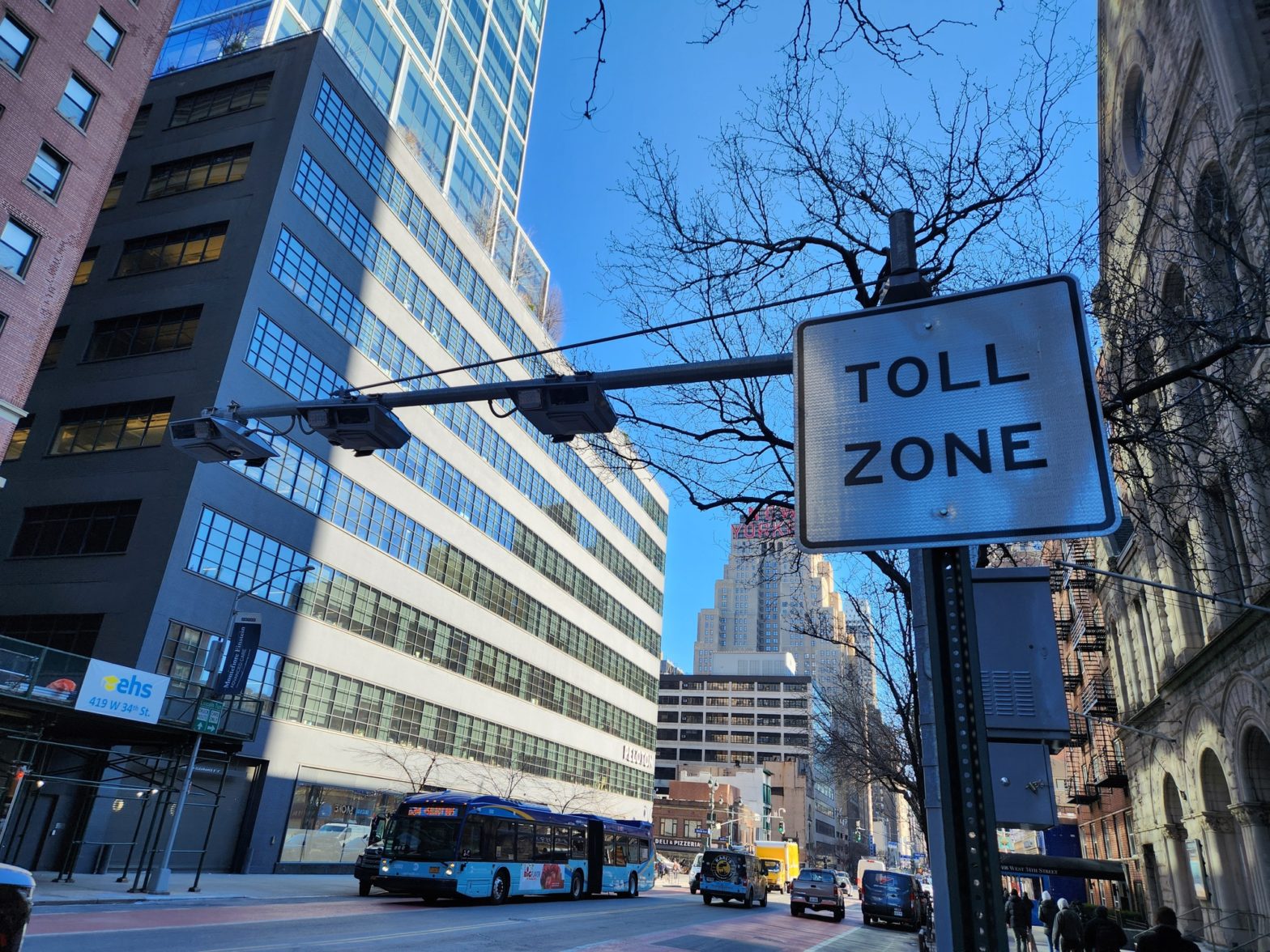
New York City’s congestion pricing scheme did not trigger the feared surge in parking demand outside Manhattan’s congestion relief zone, according to a new Department of Transportation study that challenges one of the programme’s biggest criticisms.
The report found little evidence that motorists were avoiding the toll by parking outside the zone and completing their journeys by public transport. Instead, it concludes that longstanding pressure on kerbside parking, particularly free on-street spaces, remains the primary cause of parking shortages across the city.
The Department of Transportation analysed parking activity at 4,319 block faces before and after the Central Business District Tolling Program was introduced. The assessment covered six neighbourhoods within the congestion relief zone, the border area north of 60th Street, and locations surrounding 16 transit stations across Manhattan, the Bronx, Brooklyn and Queens.
In the foreword, Transportation Commissioner Mike Flynn said “the worst fears about the impact on parking in New York City over the last 18 months have not come to pass”, with no disproportionate increase in demand in key areas outside the congestion relief zone during peak tolling hours.
Parking conditions inside the zone remained largely stable following the introduction of congestion pricing. Outside the zone, occupancy increased modestly, but in 17 of the 20 time periods analysed the increase was less than five percentage points, which the department says is within likely normal variation.
Metered parking immediately north of the congestion relief zone experienced larger increases, ranging from seven to 28 percentage points. However, the report found no discernible pattern of commuters leaving vehicles outside the zone during peak tolling periods. Instead, occupancy rose across all time periods, including evenings and overnight, suggesting park-and-ride behaviour was not the primary factor behind the increase.
The report also found that free parking spaces remained heavily occupied both before and after congestion pricing. Occupancy at streets with only alternate-side parking regulations was consistently above the department’s threshold for low parking availability and frequently approached 100%, while metered parking generally continued to have greater availability.
Flynn said the findings instead reinforced “a more fundamental challenge with on-street parking in New York City”, arguing that “the preponderance of free parking across New York City is, by far, the prime driver of limited parking availability and drives the endless battle for curb space”. He said the findings would help inform future parking reform through the city’s new Office of Curb Management.
Image: Steve Seepersaud | Dreamstime.com