Latin America’s electric bus fleet reaches 10,000
13 August 2026
by William Thorpe
More than 80 cities across the region now operate electric buses, with Santiago, São Paulo and Bogotá accounting for over 7,000 vehicles.
The 10,000 electric bus milestone was announced by C40 Cities and the International Council on Clean Transportation (ICCT) at the Lat.Bus 2026 transport and mobility event in São Paulo.
Santiago, São Paulo and Bogotá account for more than 70 percent of the total. C40 and the ICCT estimate that the region’s electric buses prevent more than 10 million tonnes of carbon dioxide emissions annually.
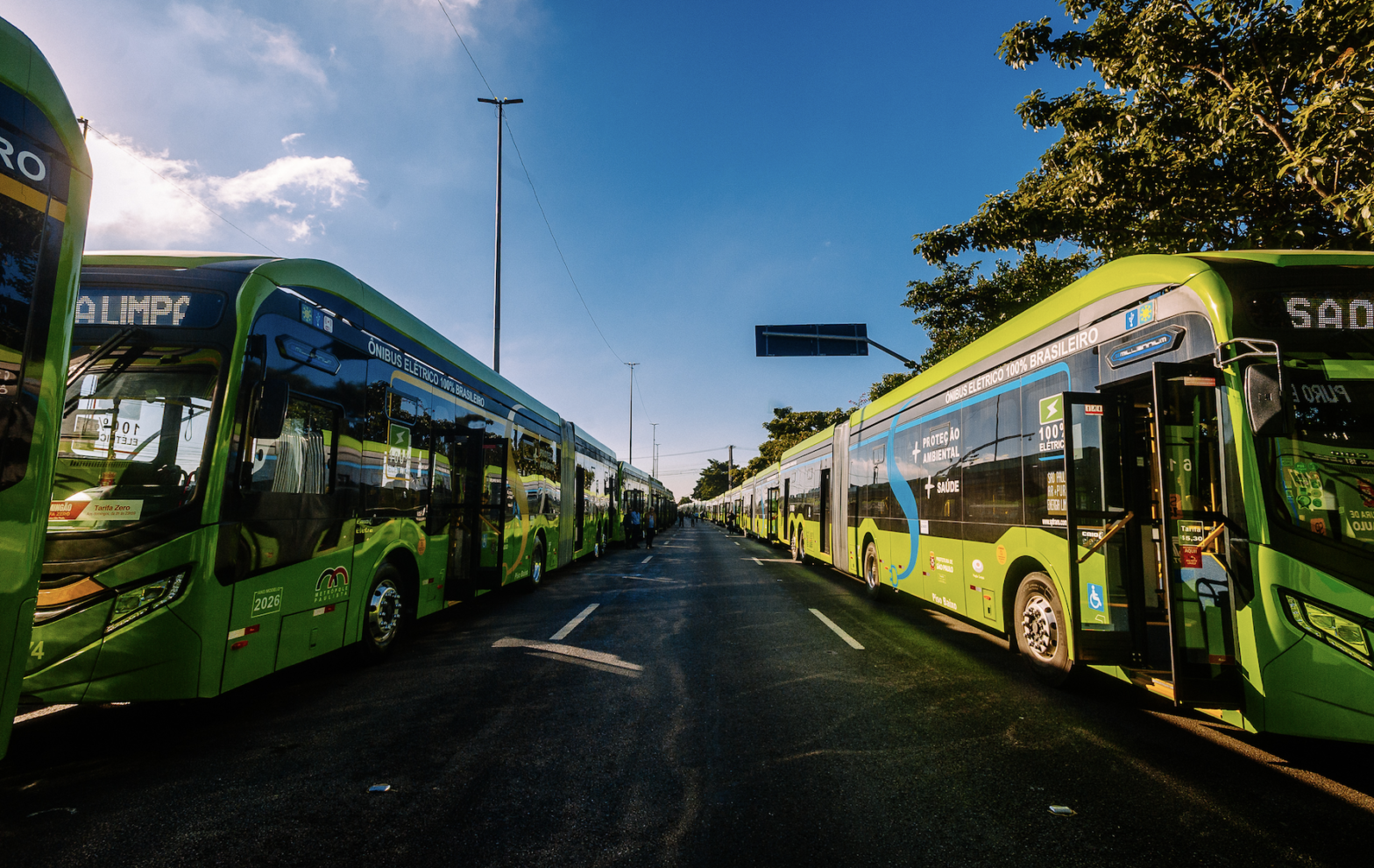
São Paulo added 500 electric buses in June, taking its fleet to 1,759 and making it the second largest in Latin America. The total comprises 1,570 battery-electric vehicles and 189 trolleybuses.
The city estimates that its fleet prevents approximately 130,000 tonnes of carbon dioxide emissions and saves 57 million litres of diesel each year. The vehicles form part of a municipal system carrying more than seven million passengers a day.
“We are accelerating the energy transition of the country’s largest city and consolidating a public policy that is already a national and international benchmark,” said Ricardo Nunes, Mayor of São Paulo. “Through a single delivery of 500 new electric buses in June, the city achieved the environmental equivalent of planting 3.2 million trees per year.”
São Paulo has assembled an investment programme worth approximately R$6.5 billion (US$1.25 billion), drawing on national and international funding. The Brazilian Development Bank, World Bank and Inter-American Development Bank are among the participating institutions.
Municipal rules also prevent operators from replacing buses that reach the end of their working lives with new diesel vehicles. This is intended to move the fleet progressively towards low- and zero-emission models.
“Reaching 10,000 electric buses in operation shows that the transition to zero-emission transport is no longer a promise but a reality in Latin American cities,” said Ilan Cuperstein, Regional Director for Latin America, C40 Cities.
Other Brazilian cities are preparing electric bus projects. The federal government has committed R$319 million for 100 vehicles and charging infrastructure in Recife, while Belo Horizonte is commissioning 27 depot chargers to support approximately 100 buses.
Rio de Janeiro is studying the infrastructure and financing required to prepare its terminals for electric vehicles. Salvador, meanwhile, plans to electrify at least half of its bus rapid transit fleet.
Image: C40