What the World Cup can teach stadium operators and cities
20 October 2026
by Jonathan Andrews
With European stadium operators set to gather in Nice at the beginning of November, Jonathan Andrews spoke to Andy Rhodes, UK&I Managing Director, Lenovo about how technology is assisting stadium management and what the key learnings are from this year’s FIFA World Cup.
What specific technologies did Lenovo support during the World Cup, and which of them have the clearest applications for city governments?
We worked closely with FIFA to develop and deploy technologies that improved how teams, officials, organisers and audiences experienced the event across 16 cities, 48 teams, 104 matches and around 600 FIFA sites. More than 25,000 devices and hundreds of specialists supported operations spanning stadiums, broadcast centres, team base camps, venues and command centres. For fans, AI-powered Referee View used image processing and stabilisation software to enhance footage from referee body cameras in near real time. Football AI Pro, used by all 48 participating teams, analysed more than 2,000 performance metrics and turned them into rapid reports, video clips and immersive 3D match recreations.
What’s really interesting about the technology, and the way it operated, was how a lot of data was turned into something useful, quickly. That’s as relevant to a city as it is to the World Cup.
Think about the transport network. You’ve got information coming from passengers, vehicles, stations, live video, connected sensors and different operating teams. If you can bring that together in real time, you can understand where pressure is building and respond much faster when something goes wrong. Digital twins can provide a dynamic view of transport hubs, roads and public spaces, while AI analytics can make reliable insights accessible to more authorities. The same applies to emergency services, where having the right information available at the right moment can support much better decision-making. That’s where technologies such as edge computing and our Digital Workplace Solutions become interesting for cities. It’s not about replicating what we did at the World Cup, but bringing data together and giving people useful information when they need to make a decision.
What did operating across three host countries reveal about integrating technology across different transport networks, public agencies and digital systems?

The World Cup demonstrated the importance of connectivity when working across multiple locations. We’re talking about three countries, 16 cities, 104 matches and millions of visitors, so there are a lot of moving parts. The challenge at that scale is making sure everyone has access to the information they need, when they need it. People need to be able to access the right information wherever they are, and the underlying infrastructure has to remain reliable as demand changes. Our AI-powered infrastructure and digital workplace solutions helped support this level of coordination, delivering 99.99% uptime across tournament operations.
This is particularly relevant for cities because public services don’t operate within neat boundaries. Transport disruption in one area can quickly affect neighbouring networks or emergency services. Behind the scenes, an Intelligent Command Centre aggregated data from 40 FIFA functional areas, giving officials a shared view across areas including security and ticketing and making it easier for broadcasters and stadium teams to identify issues early and respond rapidly. The lesson from the World Cup is that technology needs to connect fragmented systems and work across organisational and geographic boundaries, so services can remain resilient even when operating conditions change.
Were there particular pressures or disruptions during the tournament that tested the resilience of this infrastructure, and what lessons emerged?
The tournament placed the infrastructure under sustained pressure rather than relying on a single controlled environment: operations extended across 16 cities and roughly 600 FIFA sites, while up to 45 cameras per match and around 200 broadcasters were working live for audiences around the world. The Intelligent Command Centre helped teams identify emerging pain points by aggregating data from 40 FIFA functional areas into one shared operational view. That visibility allowed officials, broadcasters and stadium teams to spot issues early, coordinate their response and protect both tournament operations and the fan experience. Resilient systems depend not only on capacity, but also on centralised oversight, reliable real-time information and the ability to act quickly when demand or conditions change.
How was AI used to improve crowd movement, safety or transport operations, and what evidence demonstrates its impact?
AI gave operational teams a much better view of what was happening across venues in real time. Digital twins of venues provided real-time intelligence on trends and movement patterns, helping organisers understand where crowds were building and what that could mean for transport, security or the wider operation. Smart Wayfinding and AI-guided navigation also helped fans explore landmarks, fan zones and other points of interest, while enabling routes to be adjusted around security cordons. Bringing those signals together meant teams could anticipate pressure and coordinate their response much more quickly.
The evidence is in the scale at which these capabilities operated during the tournament. Applied to cities, the principle is the same. If a railway network can see congestion building in real time, it can anticipate the effects elsewhere, redirect commuters or pedestrians around disruption or overcrowded areas, and guide visitors towards alternative routes before the problem spreads.
It’s not enough to know you’ve got a problem; you need to be able to understand what’s happening early enough that you can actually do something about it.

What would cities need to change in their procurement, data governance or internal capabilities to adopt these technologies beyond major events?
I think it’s important to look at the whole environment rather than buying technology in isolation. Rather than asking what the best device or AI is, start by identifying what problem you are trying to solve. Can the technology be integrated within the wider environment? Data governance is also important. Cities already have huge amounts of data, so you need to be really clear about where that data sits, who has access to it and how it can be used. Particularly with AI, you need the right governance and security around it from the start.
The biggest piece is people. You can put all of this technology in place, but if the people using it don’t understand how it makes their job easier or helps them make a better decision, you’re not going to get the transformation you’re looking for. I don’t think this is fundamentally a technology problem. The technology is there. It’s about connecting the systems, putting the right governance around them and, most importantly, bringing your people with you.
Major events attract exceptional funding and temporary resources. How can cities apply these lessons affordably to everyday services once the tournament has ended?
I don’t think cities need to take what they see at a World Cup and try to replicate it directly. The important thing is to understand what worked and then work out where the technology can solve a real problem. Start with the areas where you can see the value. That might be using real-time information to respond quicker to transport disruptions or reducing downtime in a public service. If you can demonstrate an outcome in one area, you can then look at how you scale it elsewhere.
You don’t need to rip out the technology you already have and start again. A lot of this is about making better use of the systems you already have and adding capabilities where it makes sense. That’s how you make it affordable.
What are the most important lessons stadium operators should take from this World Cup?
What stood out most was the scale at which largely invisible technology had to work as one coordinated system. Across multiple cities, venues and operational teams, AI, digital twins, connected devices and centralised oversight reduced friction for fans and gave organisers the information they needed to act quickly. For city leaders, the lesson is not to copy a major tournament wholesale, but to create a clear operational view, start with a defined public-service problem and scale what demonstrably works.
Trust is equally important. Organisations build it by putting governance, security and accountability in place from the start; being clear about how data is collected, accessed and used; and ensuring that people understand how the technology supports better decisions. The World Cup showed that when reliable infrastructure, useful real-time insight and well-prepared teams come together, technology can strengthen resilience and improve experiences at extraordinary scale. Those are directly relevant principles for safer, more efficient and more responsive cities.
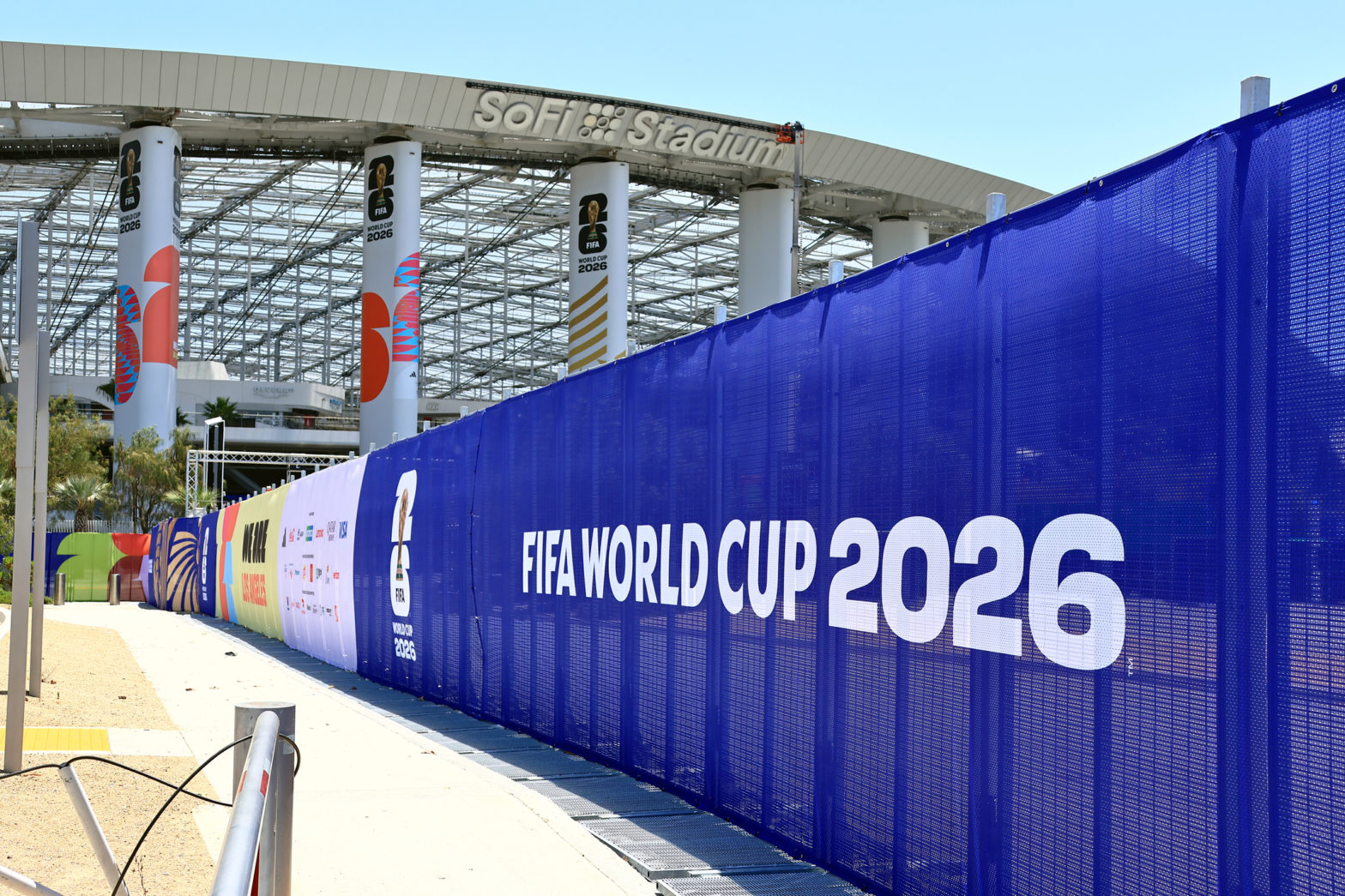
Main image: Walter Cicchetti | Dreamstime.com