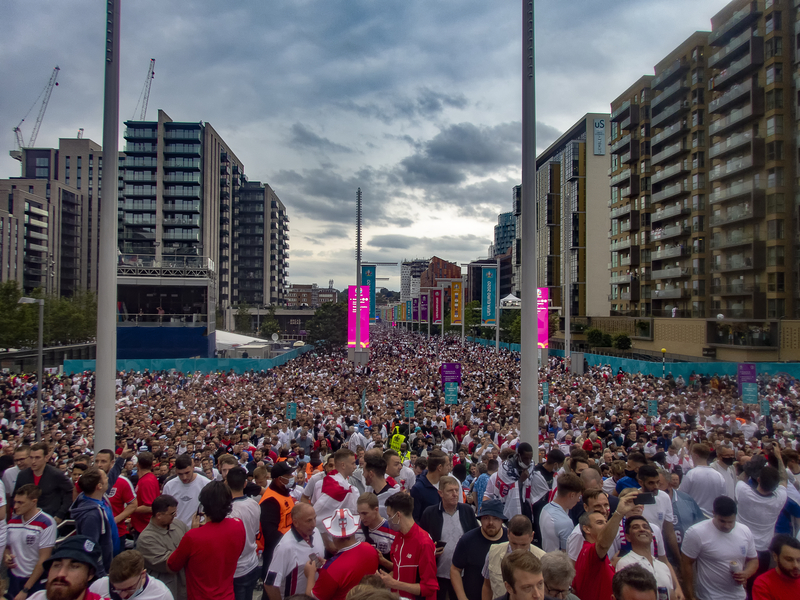
How cities are using data to analyse the impact of mega-events
05 May 2026
by Jonathan Andrews
Cities have long relied on forecasts to justify the cost and complexity of hosting major sporting events. Hotel occupancy, visitor surveys and tourism projections have traditionally underpinned claims of economic uplift.
But as cities prepare for the FIFA World Cup 2026, a shift is underway. City leaders are moving from estimates to evidence, using real-time data to understand not just how many people attend events, but where they go, what they spend, and how those patterns shape the wider urban economy.
The scale of the opportunity is significant. According to football’s governing body FIFA, the tournament is expected to generate US$80.1 billion in global economic output and add US$40.9 billion to GDP, as well as generating 824,000 full-time equivalent jobs. In the US alone–one of the three host countries–GDP impact is projected at US$17.2 billion, with US$3.4 billion in additional tax revenue.
For host cities, the question is no longer whether major events generate value. It is how that value is measured, distributed and sustained.
Traditional approaches to measuring event impact offer only a partial view. Surveys capture what visitors say they will spend, while hotel occupancy provides a narrow lens on activity concentrated in specific locations.
Payments data is emerging as a more nuanced measure of economic impact. Rather than relying on projections, cities can now observe how money moves through their economies during events.
“Cities can use payments data to plan for major events, support local businesses, and improve coordination, says Rajiv Garodia, Global Head of Visa Government Solutions which provides cities with anonymised and aggregated data. “This data can show how and where visitors are spending their money during an event, giving city administrators insight into for example, sales volumes, average transaction amounts, number of active cardholders in each area.”
That shift from reported behaviour to observed activity is significant. It provides city leaders with a clearer picture of how visitor spending differs from that of residents, and how demand fluctuates across sectors and locations.
Understanding the full economic footprint
Mega-events are often judged on headline figures, but the more complex challenge is understanding where economic benefits are realised.
Tourism linked to the World Cup is expected to generate approximately US$7.5 billion in expenditure, with activity concentrated in hospitality, retail and transport. Accommodation and food services are projected to benefit most, followed by real estate and wholesale and retail sectors.
Payments data allows cities to track how this activity is distributed.

“This macro-level view can help cities determine whether spending is concentrated in a particular area, how visitor spending differs from resident spending, or how it affects different sectors like accommodation, transport, or retail,” Garodia explains.
For city leaders, this insight is critical as the economic case for hosting events increasingly depends on demonstrating benefits beyond stadium districts and central business areas.
It also enables more targeted interventions. Cities can identify which sectors are experiencing the greatest uplift, where smaller businesses are benefiting, and where support may be needed to manage demand.
“Cities can analyse payments data in real-time,” adds Garodia. “Administrators don’t have to wait weeks for survey results or footfall reports to get a picture of what’s happening on the ground.”
This immediacy is particularly important during large-scale events, where demand can shift rapidly across neighbourhoods. Payments activity can also serve as a proxy for mobility management, providing insight into how people navigate the city and assisting transport managers to identify congestion hotspots, manage crowd flows and adjust services in near real time.
“Where people spend money is a reliable indicator of where they are, meaning spending data can be an effective tool for managing how visitors move around a city,” he adds.
Philadelphia’s citywide approach
For Philadelphia, one of the World Cup host cities, preparations are focused on coordinating activity across the entire urban system.
“Preparing Philadelphia for an event of this scale requires us to operate as one coordinated city across many neighbourhoods, while never losing sight of our core responsibility to residents,” says Melissa Scott, CIO, City of Philadelphia. “We are simultaneously ensuring public safety and neighbourhood services meet increased demand, while maintaining the reliability residents expect day to day.”
To assist with this mission, the city has built an integrated platform supported by real-time data that will provide Scott and her team with a citywide operational picture allowing them to respond quickly and effectively.
This model brings together multiple layers of infrastructure, enabling the city to respond dynamically to changing conditions and deploy resources where they are needed most.

“The 2026 Access Philly mobile application will extend visibility and engagement beyond the city centre, driving traffic to local businesses and neighbourhood commercial corridors to support citywide economic development,” Scott says.
The app includes accessibility filtering, bike-rental locations, push notifications for safety updates, family-friendly location sorting and 911 text integration. The application is designed to address a long-standing issue in event management: fragmentation of data and information.
“Historically, event information has been fragmented across multiple platforms, making it difficult for residents and visitors to access reliable, real-time updates,” she explains. “The app changes that–serving as a single, trusted digital front door that brings the entire city experience into one seamless, intuitive platform.”
A central focus for Philadelphia is ensuring that the economic benefits of the World Cup reach neighbourhoods across the city. Along with the development of the application, the city has upgraded digital infrastructure in areas such as Lemon Hill with the addition of cameras and the installation of fibre bringing permanent neighbourhood improvements that will outlast the World Cup.
By integrating event discovery, navigation and local business information, the mobile app aims to distribute visitor activity more evenly, supporting economic development beyond traditional hotspots.
From a national perspective, the World Cup is expected to drive a significant increase in tourism and a disproportionately large economic impact.
“FIFA estimates more than 1 million international visitors across the whole event,” says a US Travel Association spokesperson. “International visitors spend US$4,000 per trip. [That is] eight times more than domestic visitors and will likely spend more at the World Cup.”
This influx of spending supports jobs, local businesses and public finances with the increased tax dollars supporting local communities.
At the same time, the event presents a longer-term opportunity to strengthen the country’s tourism profile.
“The World Cup is an advertisement with the power to welcome the world to the US for decades to come,” said the US Travel Association spokesperson. “It’s also a very important opportunity to work our muscles and prepare for future major events like the 2028 Olympics and create a more seamless travel process for international visitors.”
While immediate economic gains are important, cities are increasingly focused on long-term outcomes.
One of the challenges is determining whether events create sustained economic growth or simply temporary rises in activity. Payments data provides a consistent way to track these trends over time.
“Cities can track spending trends before, during and after an event to monitor whether visitor expenditure stays elevated once the event concludes,” Visa’s Garodia explains.
This allows cities to assess how visitor profiles evolve, which sectors maintain growth and how activity shifts geographically.
“They can also benchmark those outcomes against comparable events in other cities or countries, providing real context for evaluating whether an event delivered lasting value or simply a short-term spike,” he says.
For Philadelphia, preparations for 2026 are being treated as a long-term transformation rather than a one-off effort.
“We are taking a proactive, system-level approach to resilience,” Scott says, pointing to cross-agency simulations, cybersecurity testing and infrastructure upgrades.
These efforts are designed to ensure the city can handle peak demand while strengthening everyday operations. The investments extend across technology, public safety and operational coordination, creating a foundation for future events and broader city services.
“We are also using other large-scale events as opportunities to pilot and refine our strategies in real-world conditions,” she adds.
The FIFA World Cup 2026 is set to deliver a major economic boost to host cities. But its significance lies equally in how it is reshaping the tools cities use to understand and manage that impact. With access to real-time data and the use of integrated operational management systems, cities are gaining a clearer picture of how events affect neighbourhoods, businesses and infrastructure.
For Philadelphia, that shift is already embedded in its approach.
“Philadelphia’s preparation for 2026 is not just about event readiness–it is a long-term investment in infrastructure, operations, and service delivery that will continue to benefit residents well beyond the events themselves,” Scott says.
Main image: Rob Atherton | Dreamstime.com