How Bologna is using its data valley to rethink city governance
01 February 2026
by Jonathan Andrews
Bologna’s role in Italy’s Data Valley has given the city access to computing power few municipalities can claim. The Data Valley is a national cluster of high-performance computing and data infrastructure concentrated in Emilia-Romagna, anchoring assets such as the Leonardo supercomputer and the Big Data Technopole.
That capacity is now being channelled into a new approach to governance through the Bologna Digital Twin, which was outlined during a webinar hosted by the European Data Portal, examining how digital twin technologies are being used in practice to support urban policymaking across Europe.
At the centre of Bologna’s effort is a project launched in 2024 that aims to reshape how policies are designed, tested and explained. Rather than focusing on eye-catching 3D models, the city is using its digital twin to confront harder questions about fairness, behaviour and trade-offs in urban decision-making.

“Cities are not machines to be regulated or processes to be optimised, but ecosystems in constant evolution,” said Stefania Paolazzi, Innovation Manager, Comune di Bologna.
That philosophy runs through Bologna’s entire digital journey. The challenge, they argue, is turning complex data into tools that help policymakers and citizens understand how choices affect real lives.
“We would like to use this data more and more to support effective decision-making in the city, and not just keep the data in our offices,” she said.
From industrial models to civic insight
Urban digital twins are often inspired by industrial systems, optimised for efficiency and control. Bologna is deliberately pushing back against that logic. Its approach combines geometric and physical modelling with a civic layer that captures behaviour, social dynamics and vulnerability.
This shift matters most in policy areas where impacts are uneven. Mobility, air quality and climate adaptation all affect neighbourhoods and social groups differently yet are often debated in abstract terms. Bologna’s digital twin is intended to surface those differences before policies are locked in.
“What we’re trying to do is modelling not only traffic and mobility dynamics, but also people’s behaviours and social vulnerabilities,” she explained.
Mobility is the most advanced use case so far. The city is using the platform to simulate how changes to traffic rules, vehicle access or incentives might alter emissions, congestion and daily routines, while also highlighting indirect effects on vulnerable groups. Similar thinking underpins work on heatwaves, where environmental data is combined with insights into how residents experience extreme heat.
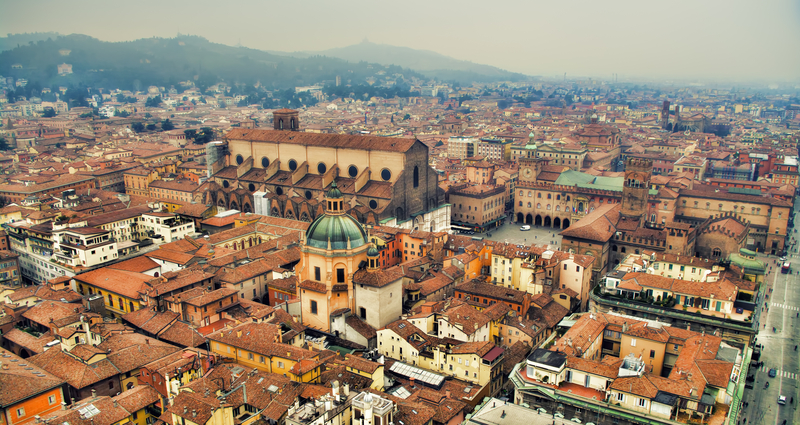
A third strand focuses on Bologna’s historic city centre, where a major regeneration programme is expected to bring competing pressures around conservation, public space and climate resilience.
“We really think that here the digital twin can offer tools to co-design actions to improve the liveability of the historic city centre,” she said.
Rather than delivering a finished product, Bologna is developing the digital twin through incremental research and development cycles, using real policy challenges to shape both the technology and the governance around it. That process has required changes inside the administration itself, from how departments share data to how decisions are discussed.
For Paolazzi, that human dimension is the real test of success.
“The biggest challenge is not the technical part, but the human side of the problem,” she said. “We really want to stick to these objectives, even if it takes time and even if it takes a lot of effort in our engagement strategies.”
Main image: Rigmanyi | Dreamstime.com