
Cities secure US$1 million each to scale reform
25 February 2026
by Jonathan Andrews
Twenty-four city halls across 20 countries will each receive US$1 million to scale tested innovations under the 2025–2026 Mayors Challenge, the largest round yet of the competition run by Bloomberg Philanthropies.
Selected from more than 630 applicants, the winners were chosen for ideas that have already been prototyped with residents and are now ready to expand. The award includes operational support and funding for dedicated staff, reflecting the programme’s focus on building long-term capacity inside city government rather than short-term pilots.
Announcing the winners, Michael Bloomberg, Founder of Bloomberg Philanthropies and three-term mayor of New York City, said: “The most effective city halls are bold, creative, and proactive in solving problems and meeting residents’ needs–and we launched the Mayors Challenge to help more of them succeed. We look forward to supporting this year’s 24 winners as they bring their innovative projects to life–and to seeing their ideas spread to more cities around the world.”
A strong theme in this year’s cohort is the use of data, artificial intelligence and cross-agency reform to redesign frontline services and intervene earlier.
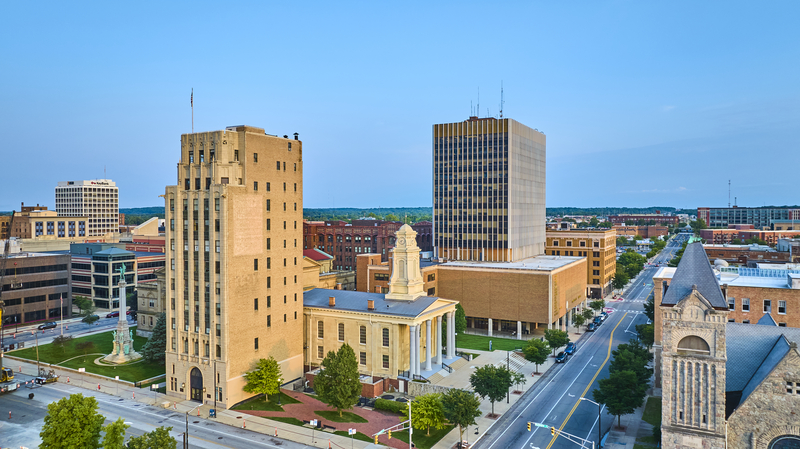
In South Bend (pictured), officials will apply artificial intelligence to the city’s 311 system to anticipate service disruptions and proactively connect residents with the help they need. Rather than relying solely on inbound complaints, the city aims to use predictive tools to spot patterns early and intervene before issues escalate.
Similarly, Ghent will overhaul how residents access social benefits, linking government data and coordinating teams around life events such as the birth of a child. The goal is to ensure eligible families receive support automatically, addressing the reality that a significant share of residents who qualify for assistance never claim it.
“We will redesign how our city supports residents around real-life events, like the birth of a child, by connecting government data, coordinating teams, and new technology,” said Mathias De Clercq, Mayor of Ghent. “This will allow eligible families, including the up to 70 percent who miss out today, to receive the benefits they are entitled to proactively and reliably, and never by chance.”
Beyond Europe and the US, digital tools are also central to projects in Medellín and Rio de Janeiro, where AI will be paired with municipal outreach to accelerate food distribution and connect families to early childhood services including health care, vaccinations and school enrolment.
The 2025–2026 Challenge was launched in October 2024 at Bloomberg CityLab in Mexico City. Fifty finalist cities each received $50,000 and technical support to prototype their ideas and gather resident feedback before final selection.
Image: Nick Klein | Dreamstime.com