Paris unveils €200 million cycling plan
19 October 2026
by William Thorpe
Paris has announced a €200 million cycling plan to deliver 140 kilometres of additional cycle paths and improve safety at 420 junctions by 2032. The programme will also introduce a specialist municipal police unit targeting dangerous driving and trial new warning systems on refuse trucks.
The Plan vélo 2027–2032 combines network expansion with measures to close gaps between existing routes and improve connections to neighbouring municipalities. It includes a further 220 kilometres of contraflow cycling routes, allowing cyclists to travel in both directions on streets that are one-way for motor vehicles.

“I want every journey to take place in good conditions, without gaps in infrastructure or danger at junctions,” Emmanuel Grégoire, Mayor of Paris, wrote in the plan’s press dossier. “That is why making junctions safer is a priority of this new plan. We must continue major infrastructure projects, but also act quickly where improvements are needed.”
Safer junctions and connected routes
Work to improve safety at 56 junctions is scheduled for 2027, building on 350 junctions treated since 2020. The city will combine permanent redesigns with quicker interventions that can subsequently be made permanent following evaluation.
At complex junctions, Paris will examine traffic signal timings to separate certain cycling and motor vehicle movements. Green-light durations could also be adapted to cycling traffic volumes, while coloured road surfaces will help make cyclists’ routes more visible.
The city says motor vehicles are involved in crashes accounting for 64 percent of cyclists killed or injured seriously enough to require hospitalisation. Junction improvements form part of its wider Vision Zero ambition to eliminate road deaths and serious injuries.
Reducing car use
The plan builds on Paris’s wider efforts to reduce car use and promote active travel. In February 2024, residents voted to triple parking charges for heavier vehicles visiting the city, with 54.55 percent backing the proposal, although turnout was just 5.7 percent.
Paris also awarded four-year shared e-bike contracts to Voi, Dott and Lime for a service beginning in October 2025. This followed the city’s 2023 referendum on shared e-scooters, which resulted in the removal of 15,000 scooters amid concerns over rider behaviour, parking and safety.
The new cycling plan prioritises connections across municipal boundaries and integration with public transport. Clearer signs will direct cyclists towards stations and neighbouring communities, while additional secure parking will support journeys combining cycling with other modes.
“Journeys do not stop at the gateways to Paris,” Grégoire wrote. “We must build continuous routes with neighbouring municipalities, facilitate connections with public transport and develop suitable parking solutions. Cycling must be a practical everyday option, rather than an obstacle course.”
Alongside infrastructure improvements, the new municipal police unit will target driving behaviour that endangers pedestrians and cyclists. Enforcement will also address vehicles obstructing cycle lanes and cyclists failing to respect traffic lights or pedestrian priority.
By the end of 2026, Paris will trial external audible warnings on municipal refuse trucks, automatically broadcasting voice messages when vehicles turn or move off. The city is also calling for stronger national requirements on lorry visibility and safety equipment, drawing on Greater London’s safety permit system.
“The success of this ambition will be measured not only by the number of kilometres built, but by the freedom to travel and the confidence that everyone can regain in public space,” Grégoire wrote.
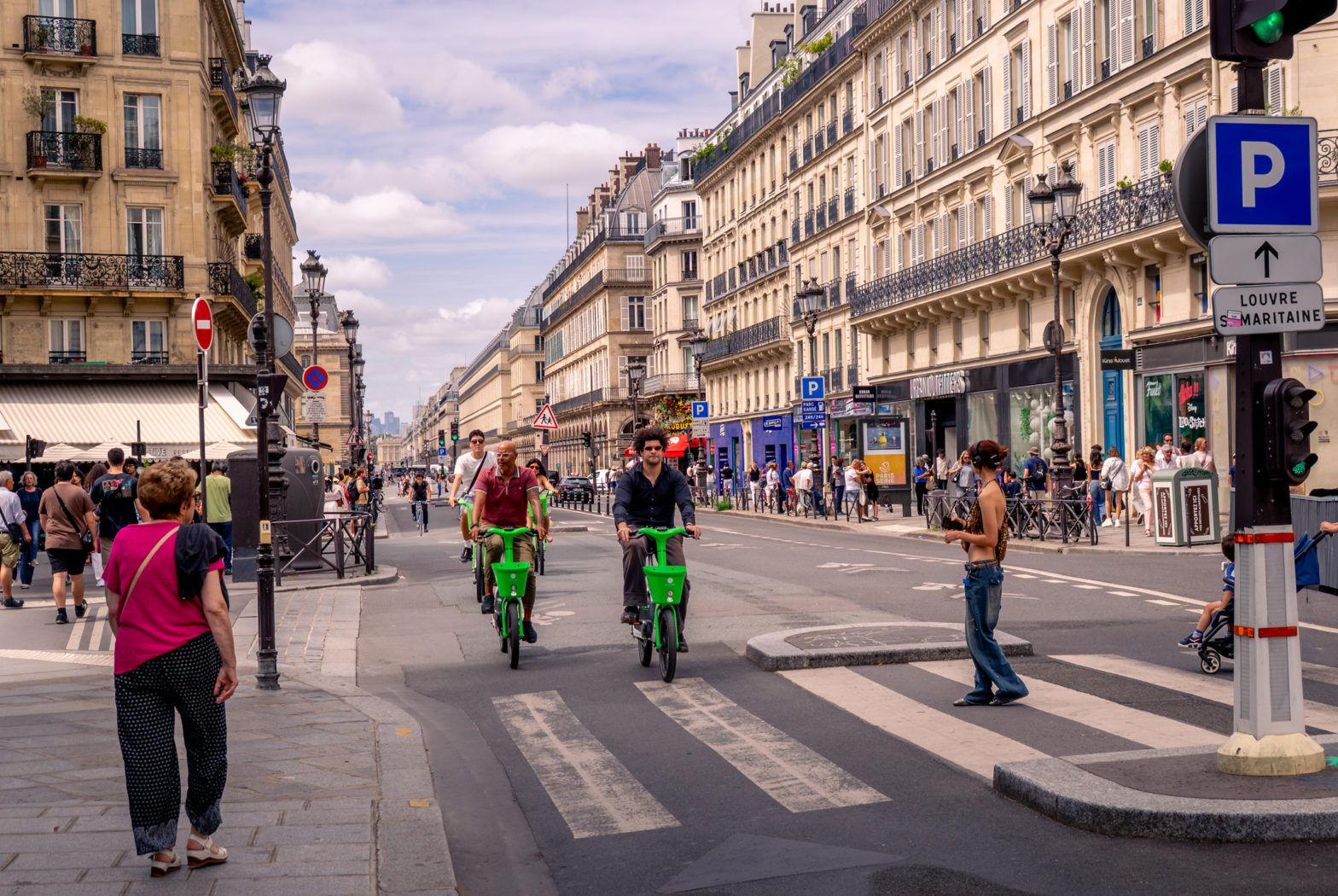
Main image: Vadim Rodnev | Dreamstime.com